
Understanding Two Critical Pathways in Rare Disease Drug Development: Science vs. Policy
For families navigating rare diseases like H-ABC/TUBB4A related leukodystrophy, the path to treatment can feel painfully slow. Behind the scenes, however, two important forces are shaping how therapies may reach patients sooner: the Plausible Mechanism Framework and the Promising Pathway Act.
While they sound similar, they represent two very different — and equally important — approaches to accelerating access to treatment.
🧬 The Science: What Is a Plausible Mechanism Framework?
The Plausible Mechanism Framework is a scientific concept used in rare disease drug development. It focuses on understanding how a disease works at a biological level.
In H-ABC, mutations in the TUBB4A gene disrupt how tubulin functions in the brain, affecting critical neurological processes. If a therapy can correct or stabilize this pathway, it may improve outcomes — even when large-scale clinical trials are not feasible.
This approach is especially important for ultra-rare conditions, where patient populations are small and traditional trials may be unrealistic.
In simple terms:
If we understand the biology, we may not need to wait for perfect clinical data to act.
🏛️ The Policy: What Is the Promising Pathway Act?
The Promising Pathway Act is proposed legislation designed to help patients access treatments sooner.
It would allow the U.S. Food and Drug Administration (FDA) to grant conditional approval to therapies that show early promise, even if full clinical trial data is not yet complete. In return, companies would be required to continue studying the treatment after approval.
This is particularly relevant for rare disease communities, where waiting for large, long-term trials can delay access for years.
In simple terms:
If a treatment shows early benefit, patients shouldn’t have to wait.
🔄 Where Things Stand Today
The Promising Pathway Act has generated significant attention in the rare disease community, but it has not yet been passed into law.
There is currently no formal FDA pathway created under this Act, and patients cannot rely on it today for access to therapies.
However, progress is still happening.
🧭 The FDA Is Already Moving in This Direction
Even without new legislation, the U.S. Food and Drug Administration has begun shifting its approach to rare disease drug development — particularly for ultra-rare conditions like H-ABC/TUBB4A.
One important development is the growing recognition of the Plausible Mechanism Framework. Regulators may consider whether a therapy is likely to work based on how well it targets the underlying biology, even when large clinical trials are not feasible.
In parallel, the FDA continues to expand the use of:
Accelerated approval pathways
Breakthrough therapy designations
Real-world evidence and natural history data
Together, these efforts reflect a meaningful shift:
Moving toward earlier decision-making based on strong scientific rationale and emerging evidence.
🔍 Why This Matters for the H-ABC Community
For H-ABC families, these two pathways offer hope from different angles:
The Plausible Mechanism Framework supports the idea that therapies targeting the tubulin pathway may be effective — even with limited trial data
The Promising Pathway Act could create a regulatory path to access those therapies earlier
Together, they highlight a critical shift:
From “prove everything before access” to “act on strong science while continuing to learn.”
💡 The Reality
Today, the Plausible Mechanism Framework is already influencing how researchers and regulators approach rare diseases.
The Promising Pathway Act, however, has not yet been enacted. Continued advocacy is essential to move policies like this forward.
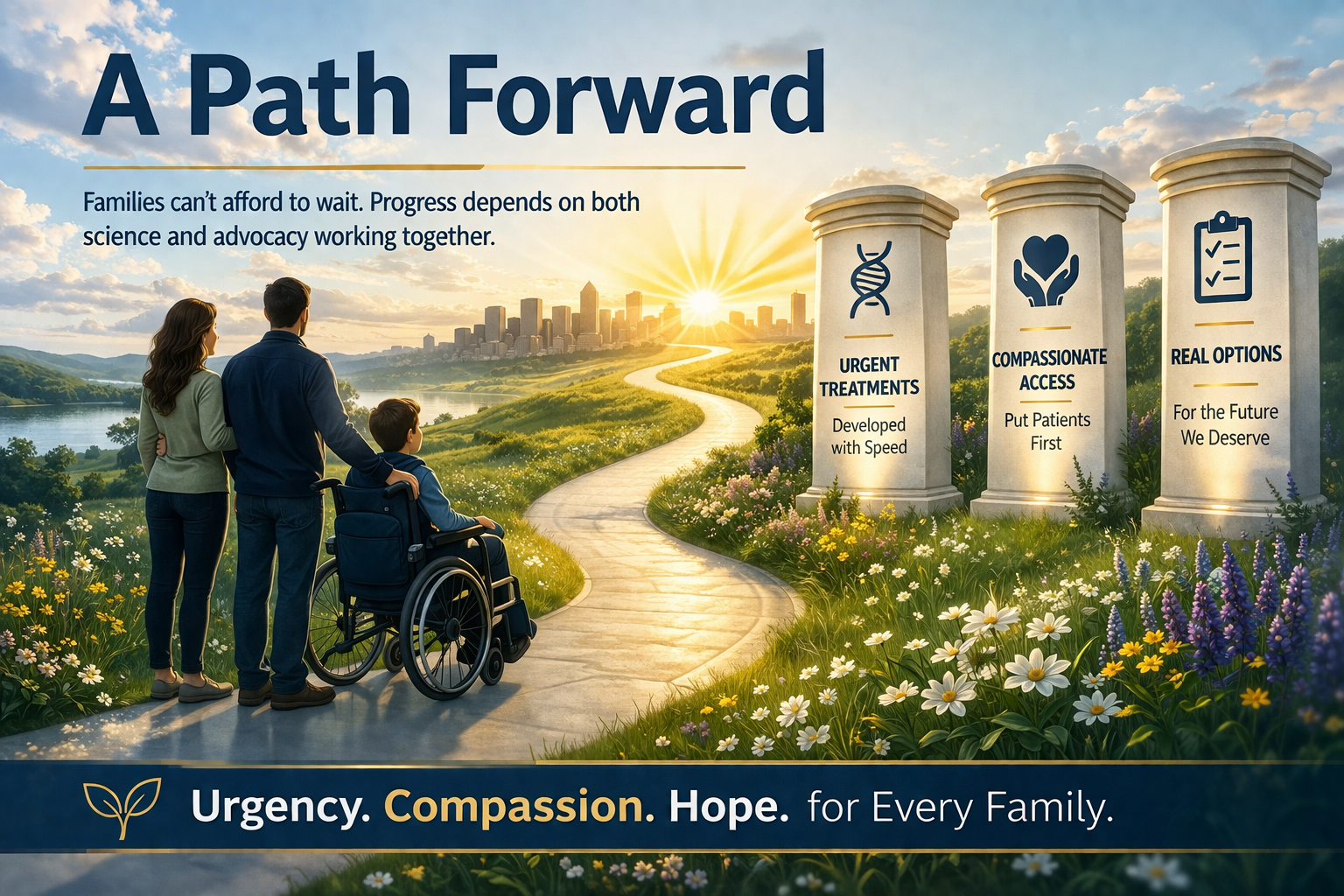
Families living with H-ABC cannot afford to wait for perfect systems. Advancing both scientific understanding and policy reform is essential to building a better future.
A future where:
Treatments are developed with urgency
Access is granted with compassion
No family is left waiting without options
At the Foundation to Fight H-ABC, we remain committed to advancing both — the science that makes treatment possible, and the policies that make it accessible.
Accelerated Approval: U.S. Food and Drug Administration
Expedited Approval: U.S. Food and Drug Administration
Plausible Mechanism Framework U.S. Food and Drug Administration