

What is H-ABC?
Understanding TUBB4A Leukodystrophy

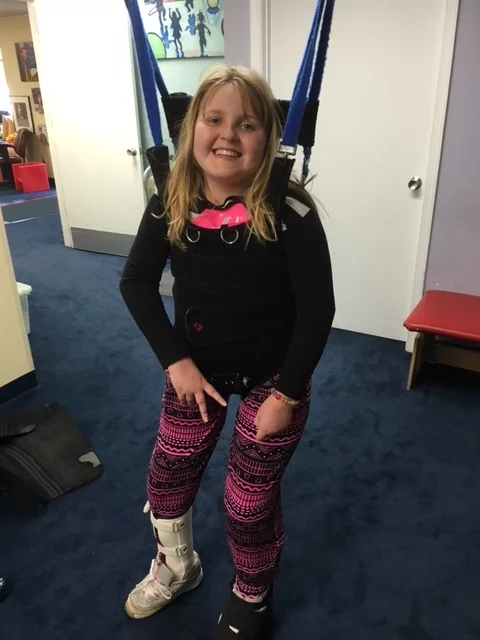


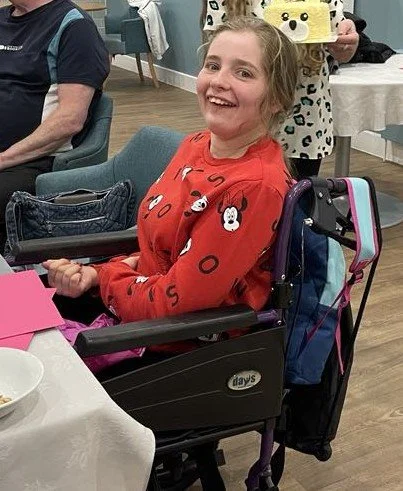

Hypomyelination with Atrophy of the Basal Ganglia and Cerebellum (H-ABC) is a rare genetic condition caused by a change (mutation) in the TUBB4A gene. It affects parts of the brain called the basal ganglia and the cerebellum, which are important for controlling movement.
In patients with H-ABC—even in early childhood—these areas of the brain become smaller and don’t work as well as they should. This often leads to challenges with movement and coordination.
H-ABC Explained
H-ABC is part of a group of disorders called leukodystrophies—there are 52 in total—that affect the white matter of the brain. White matter contains nerve fibers that carry messages between different parts of the brain and body. These fibers are covered by a protective layer called myelin, which helps messages travel quickly and smoothly.
Usually, the body creates this myelin layer during early childhood, in a process called myelination. But with H-ABC, hypomyelination happens—meaning the body doesn’t make enough myelin. Without enough myelin, nerve signals slow down, making it harder for the brain and body to communicate.
This can affect children’s development, especially their ability to move and control their muscles. Over time this become more progressive as patients age. Understanding how leukodystrophies affect myelin can help families learn more about H-ABC.
FAQ About H-ABC
-
H-ABC (Hypomyelination with Atrophy of the Basal Ganglia and Cerebellum) is a rare genetic disorder that affects parts of the brain responsible for movement and coordination. It’s caused by a mutation in the TUBB4A gene and usually appears in early childhood.
-
While they share some symptoms, the cause is different:
H-ABC is caused by a genetic mutation that affects myelin development.
MS is caused by the immune system attacking healthy myelin.
-
As of 2025, about 200 cases have been identified worldwide—most in young children. As genetic testing becomes more common, more cases may be discovered.
-
H-ABC is caused by a mutation in the TUBB4A gene, usually a new (de novo) mutation, that was not inherited from a parent.
-
Symptoms often begin in infancy or early childhood and may include:
Low muscle tone (hypotonia)
Poor coordination and motor delays
Muscle stiffness or involuntary movements
Speech and feeding difficulties
Vision or hearing problems
Seizures
Loss of balance or mobility
👉 Click here for a full list of symptoms
-
Diagnosis includes:
A physical exam by a neurologist
MRI imaging showing white matter abnormalities
Genetic testing confirming a mutation in the TUBB4A gene
-
Currently, there is no cure. However, supportive care—such as physical therapy, speech therapy, and medication—can help manage symptoms and improve quality of life.
-
Scientists are working on promising therapies:
AAV gene therapy: Adds a healthy version of the TUBB4A gene
ASO therapy: Blocks production of harmful proteins at the genetic level. An ASO trial is scheduled for 2026.
These treatments are in early development and may take years to reach clinical use.
-
Gene-based therapies usually take 5–10 years (or more) to move from lab to clinic. Funding, trial success, and regulatory approval all affect the pace.
Thanks to family-led foundations, hospitals, and researchers, progress is being made every day.
-
Get Involved
You can help by:Joining fundraising events
Spreading awareness
Donating to support research
Connect Here With the Foundation
OR email us at contact@h-abc.org -
If your child or loved one has recently been diagnosed with H-ABC, we want you to know: you are not alone.
The Foundation to Fight H-ABC is here to support you every step of the way. We offer:
Guidance on where to start after diagnosis
Connections to medical experts and clinical resources
A supportive community of families facing the same journey
Updates on research, clinical trials, and advocacy efforts
Reach out to us directly by email to: contact@h-abc.org
Together, through shared knowledge, connection, and hope—we can make a difference.
Leukodystrophy and H-ABC Facts
Looking for Trusted Information?
If your child has been diagnosed with H-ABC, you’re likely searching for reliable guidance and clarity. The Children’s Hospital of Philadelphia (CHOP) is one of the world’s top pediatric hospitals and a valued research partner in our shared fight against H-ABC
CHOP’s H-ABC resource explains the condition’s causes, symptoms, diagnostic process, and current research—providing families with a deeper understanding of what to expect and how to prepare.
Adeline Vanderver, MD, is an Attending Physician in the Division of Neurology, Program Director of the Leukodystrophy Center, and Jacob A. Kamens Endowed Chair in Neurologic Disorders and Neuroptherapeutics at Children’s Hospital of Philadelphia (CHOP).