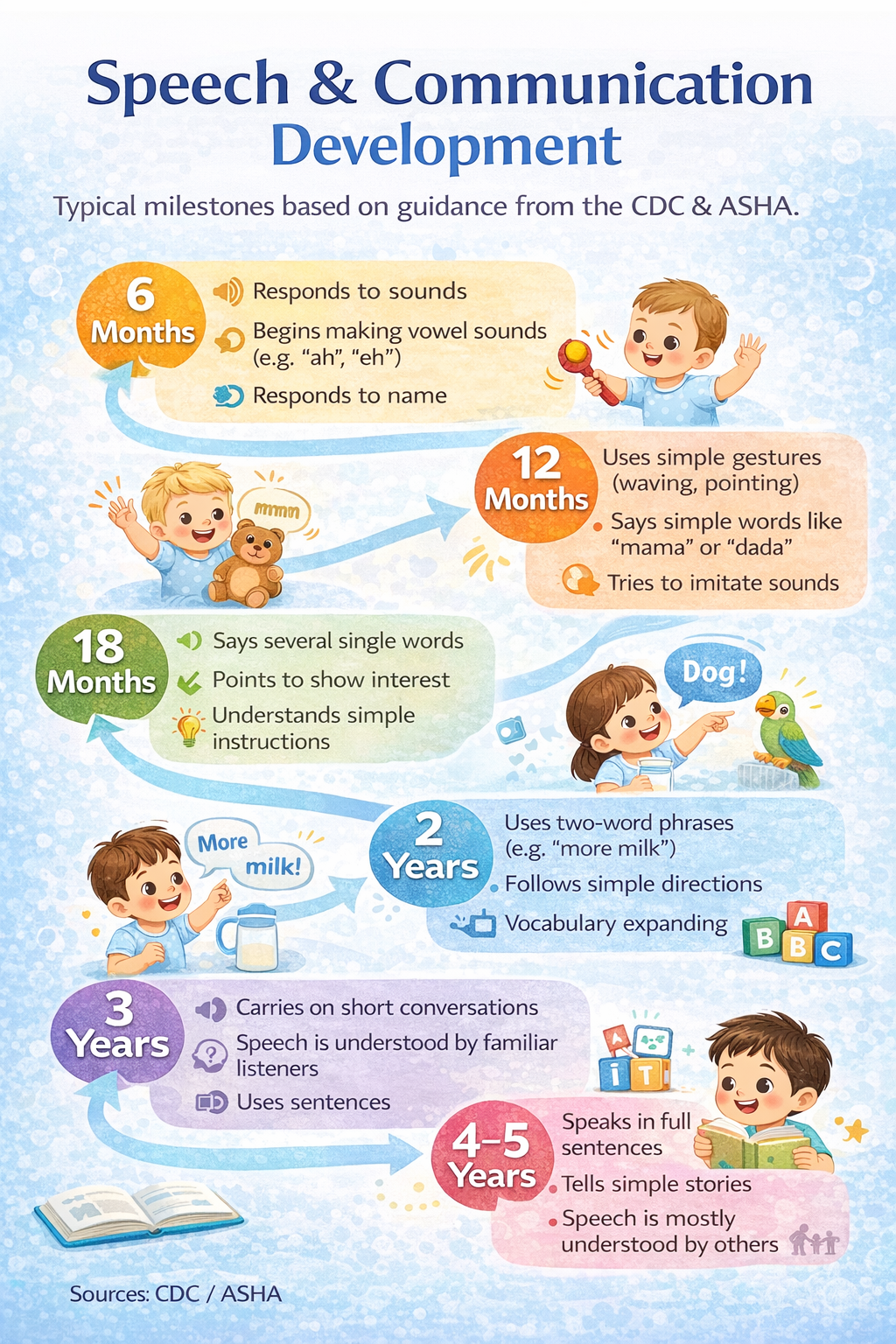
Speech and Communication in H-ABC/TUBB4A Related Leukodystrophy: What We Know and What We’re Learning
Communication plays a central role in development, learning, and social interaction. In neurological conditions such as H-ABC/TUBB4A related leukodystrophy, changes in the brain can affect how speech and language skills emerge and are maintained over time.
Leukodystrophies are characterized by abnormalities in white matter, which plays an important role in transmitting signals within the brain. These changes can affect motor control, coordination, and timing—all of which are important for speech production. As a result, individuals with H-ABC/TUBB4A may experience challenges related to motor speech, including difficulties with articulation, breath control, and the coordination required for verbal expression.
The presentation of these challenges can vary. Some individuals may develop early speech and experience changes over time, while others may have limited verbal communication from the outset. This variability reflects both the underlying biology of the condition and differences in individual progression.
Research across neurological and rare genetic conditions suggests that communication differences are common when motor pathways are affected. In pediatric neurological disorders more broadly, speech and language delays are among the most frequently observed developmental concerns, particularly when motor planning is involved.
In this context, early evaluation and ongoing support are often considered important components of care. Speech-language therapy may focus on supporting functional communication, whether through verbal speech, alternative communication methods, or a combination of approaches.
Augmentative and alternative communication (AAC) tools—including communication devices, symbol-based systems, and adaptive technologies—are increasingly used to support individuals with complex communication needs. These tools can provide consistent access to communication, even when speech is limited or changes over time.
Clinical guidance from organizations such as the American Speech-Language-Hearing Association emphasizes individualized approaches that are tailored to each person’s abilities, environment, and communication goals.
In addition to their role in care, communication measures are receiving increased attention in research. In rare neurological conditions, there is growing recognition that outcomes related to communication may provide meaningful insight into daily function and quality of life.
This is particularly relevant for H-ABC/TUBB4A related leukodystrophy, where traditional clinical measures may not fully capture changes that are meaningful to individuals and families. As natural history data continues to develop, communication-related outcomes may help inform how progression is understood and how future clinical trials are designed.
The relationship between motor function and communication also highlights the importance of a multidisciplinary approach. Speech-language pathologists, neurologists, therapists, and families each contribute to a more complete understanding of how communication evolves within the condition.
For the H-ABC/TUBB4A community, continued efforts to document communication patterns—alongside other clinical features—can support both care and research. Over time, this information contributes to a more comprehensive picture of the condition and helps guide approaches that are responsive to individual needs.