The Hidden Costs of Rare Disease Caregiving
When a family is caring for someone with H-ABC/TUBB4A related leukodystrophy or another rare neurological disease, the financial impact is rarely one single bill. It is usually a steady collection of expenses, decisions, and tradeoffs that build over time. Some costs arrive in the mail. Others show up in quieter ways: a parent reducing work hours, a caregiver using vacation time for medical appointments, a family postponing home repairs, or a sibling activity being skipped because another therapy bill came due.
Rare disease caregiving can change the entire financial rhythm of a household.
At first, families may focus on the urgent medical questions. Which specialist should we see? What does this diagnosis mean? What therapies are needed? What changes should we watch for? Those questions matter. But alongside them, another set of questions often begins to form.
What will insurance cover? How much will we owe? Can we afford the equipment being recommended? What happens if we have to travel for care? How do we keep working while managing all of this?
These questions can be difficult to talk about, but they are part of the caregiving reality.
The costs that are easy to miss
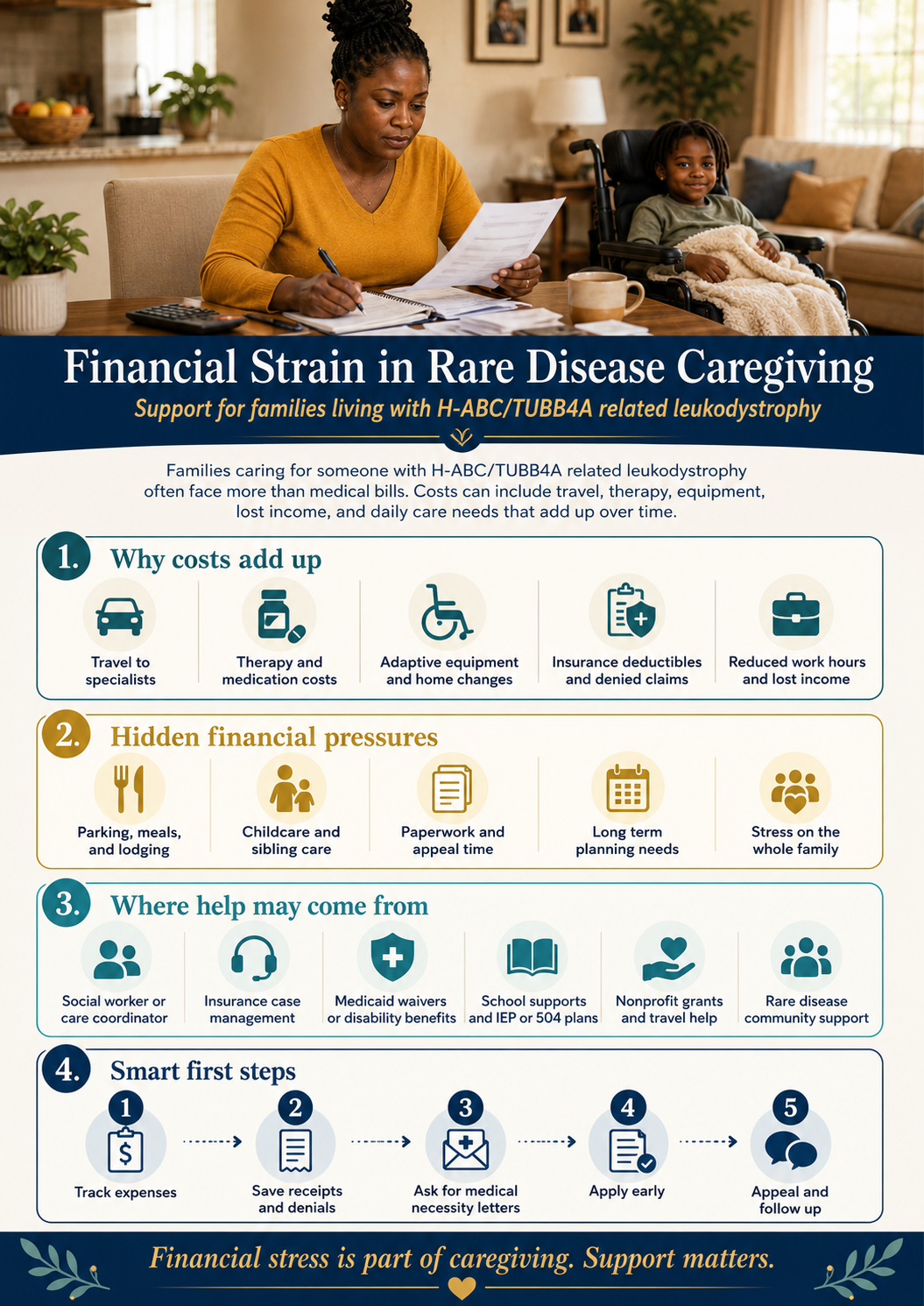
Medical bills are only one part of the picture. Families may also pay for gas, parking, tolls, meals near hospitals, overnight stays, childcare for siblings, missed work, mobility supports, home safety changes, special seating, therapy tools, prescription costs, or supplies that are needed again and again.
Even when insurance helps, families may still face deductibles, copays, out-of-network charges, prior authorization delays, and denied claims. A service may be “covered,” but only after weeks of calls, paperwork, and follow-up.
That time has a cost too.
Caregivers often become the household expert in billing codes, insurance rules, medical records, therapy notes, and appeal letters. This administrative work can happen late at night, during lunch breaks, or between caregiving tasks. It may not appear on a bill, but it takes energy, time, and attention.
Work can become harder to maintain
One of the largest financial pressures may be reduced income. Caregivers may need flexible schedules, unpaid leave, part-time work, remote work, or time away from employment altogether. Appointments, hospitalizations, therapy sessions, school meetings, and unexpected symptom changes can make a traditional work schedule difficult. This can affect more than a paycheck. It may affect retirement savings, health insurance, career growth, job security, and long-term financial stability.
Caregivers may feel pressure to keep working and pressure to be available at home. Living between those two demands can be exhausting.
Whenever possible, caregivers may want to learn what workplace protections or benefits are available, such as family leave, sick leave, flexible scheduling, employee assistance programs, or disability-related accommodations. Human resources policies vary, but asking early can help families understand their options before a crisis occurs.
Documentation can make a difference
For many services, families need strong documentation. This may include diagnosis letters, clinic notes, therapy evaluations, prescriptions, medical necessity letters, school records, insurance denials, and proof of expenses. Keeping these documents organized can reduce stress when applying for support or appealing a denial. A simple system is enough. Use a folder, binder, scanned file, or cloud folder with sections for medical records, insurance, school documents, equipment, benefits, and bills.
Caregivers do not need to create a perfect system. They need a system they can actually use.
Good documentation can help when requesting adaptive equipment, home modifications, transportation assistance, school-based services, Medicaid waiver supports, disability benefits, or nonprofit aid.
Ask about financial and practical supports
Families should not assume they are ineligible for help. Programs vary by state, age, income, disability status, insurance coverage, and care needs. Some supports are income-based. Others are diagnosis-based, disability-based, or tied to functional need.
Possible resources may include:
Medicaid or Medicaid waiver programs
Supplemental Security Income
State disability services
Insurance case management
Hospital social work departments
Nonprofit grants
Transportation assistance
Respite programs
School-based services
Medical travel assistance
Utility or food support programs
Disease-specific and rare disease organizations
A hospital social worker, clinic care coordinator, insurance case manager, school social worker, or state disability agency may be able to help families understand where to begin. The process may take persistence. Applications may be long. Waitlists may exist. A first answer may not be the final answer. When a claim or request is denied, families can ask for the denial in writing and request instructions for appeal.
Planning ahead is an act of care
Financial planning can feel uncomfortable, especially when families are already overwhelmed. But planning is not about predicting everything. It is about making future decisions a little less frightening.
Families may benefit from speaking with professionals familiar with disability planning, special needs trusts, public benefits, guardianship or supported decision-making, and long-term care planning. This can be especially important as children grow into adulthood or when care needs are expected to change.
No family should feel embarrassed about needing guidance. Rare disease caregiving can involve systems that are difficult even for professionals to navigate.
The burden is real
Financial strain is not separate from caregiving. It affects choices, stress, sleep, relationships, and health. It can make already difficult days feel heavier.
For caregivers supporting someone with H-ABC/TUBB4A related leukodystrophy, financial pressure may be part of the journey, but it should not be faced in silence. Asking about benefits, appealing denials, seeking documentation, using social work support, and connecting with rare disease organizations are practical steps toward relief.
Families deserve care that recognizes the whole picture, including the financial one.