Caregiver Support: Finding Help Before You Reach Empty
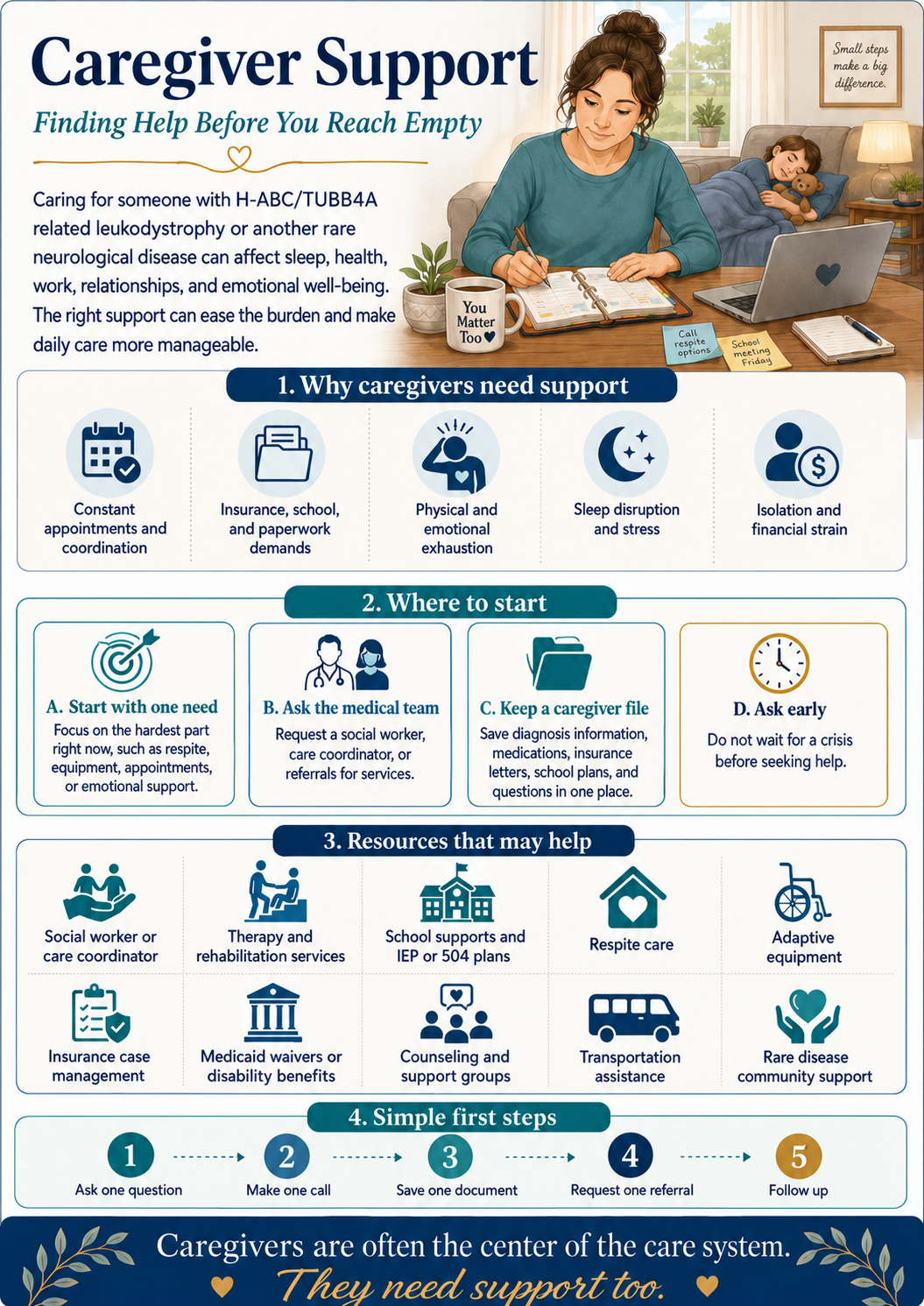
Caring for someone with rare neurological disease, such as H-ABC/TUBB4A related leukodystrophy, can quickly become more than one person can manage alone. Caregivers often become the scheduler, advocate, record keeper, insurance caller, therapy coordinator, and daily support system. Over time, that responsibility can affect sleep, health, work, relationships, and emotional well-being.
Needing help is not a sign that you are failing. It is a sign that the care needs are real.
A good place to begin is with the hardest part of daily life right now. Is it lack of sleep? Too many appointments? Physical lifting? Insurance problems? School support? Transportation? Financial strain? Respite care? Emotional exhaustion? Start with one need, not the whole list.
At the next medical appointment, ask directly for help connecting with resources.
“Is there a social worker or care coordinator we can talk to?”
“We need help finding respite care.”
“We need support managing insurance and appointments.”
“We need equipment or therapy guidance to make daily care safer.”
“We are overwhelmed and need help knowing what services we may qualify for.”
Social workers, care coordinators, therapists, school teams, insurance case managers, and state disability agencies can often help families find services. These may include respite care, home support, therapy services, adaptive equipment, transportation assistance, school accommodations, Medicaid waiver programs, disability benefits, counseling, or caregiver support groups.
Keeping a simple caregiver file can also reduce stress. This can be a binder, folder, phone note, or digital file with diagnosis information, medication lists, doctors’ names, therapy reports, insurance letters, school plans, emergency information, and questions for upcoming appointments. When everything is in one place, it becomes easier to apply for services, talk with providers, and let someone else step in when needed.
For caregivers of children or young adults, school and therapy teams can be important resource partners. Caregivers may ask about evaluations, IEP or 504 supports, assistive technology, transportation accommodations, nursing needs, therapy services, and transition planning. Written requests are helpful because they create a clear record.
Respite care is another resource caregivers should ask about early. Many families wait until they are exhausted before seeking respite, but the process can take time. Availability depends on location, age, diagnosis, eligibility, and funding. A social worker, case manager, state disability office, or insurance plan may be able to explain what options exist.
Caregivers should also pay attention to their own health. Chronic stress can affect sleep, mood, immune function, and physical well-being. Counseling, support groups, primary care visits, trusted friends, faith communities, and rare disease networks can all be part of a caregiver’s support system.
The Foundation to Fight H-ABC can serve as a starting point for families seeking information, connection, and support related to H-ABC. Broader rare disease organizations, disability agencies, and caregiver networks may also help.
Finding resources can take patience. There may be forms, referrals, waitlists, denials, appeals, and follow-up calls. Start small. Ask one question. Make one call. Save one document. Request one referral.
Caregivers are often the center of the care system, but they should not have to carry the system alone. The right support can reduce stress, protect caregiver well-being, and strengthen care for the person living with H-ABC or another rare neurological disease.