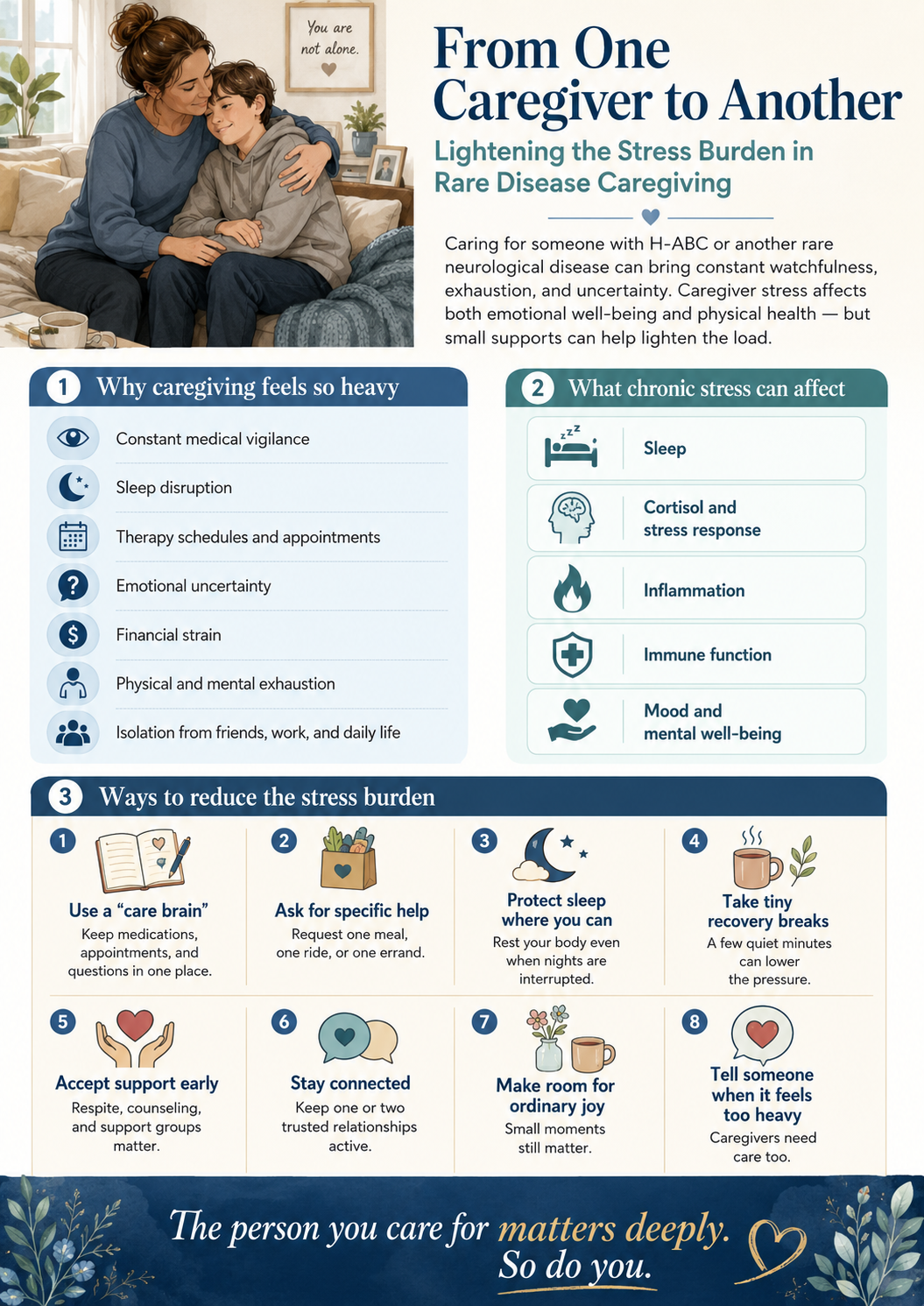
From One Caregiver to Another: Lightening a Load That Never Fully Lifts
If you are caring for someone with H-ABC/TUBB4A related leukodystrophy or another rare neurological disease, I want to start with this:
I know you are tired.
Not just “it’s been a long day” tired. I mean the kind of tired that settles deep in your body. The kind that comes from sleeping with one ear open, keeping track of symptoms, medications, therapy goals, equipment needs, insurance calls, school or work concerns, and still trying to keep ordinary life moving. Rare disease caregiving often means living in a state of constant watchfulness.
You may be watching breathing, swallowing, balance, movement, pain, seizures, fatigue, behavior, mood, or changes that are hard to explain. You may be the person who notices the small things before anyone else does. That vigilance comes from love, but it also takes a real toll.
And the stress is not just emotional. Chronic caregiving stress can affect sleep, cortisol, inflammation, immune function, mood, and mental well-being. Many of us feel it in our bodies before we ever put words to it: tight shoulders, headaches, brain fog, poor sleep, irritability, guilt, anxiety, or the feeling that we are always behind, even when we are doing everything we can. So from one caregiver to another, here are a few ways to reduce the stress burden. Not because caregiving becomes easy, but because we deserve support too.
Stop carrying everything in your head
When every detail lives in your mind, your brain never gets a break.
A notebook, binder, shared phone note, or simple spreadsheet can become your “care brain.” Use it for medications, doctors, diagnoses, therapy schedules, symptoms, insurance contacts, equipment, questions for appointments, and emergency information. This is not about being perfectly organized. It is about giving your mind somewhere to put the weight down. It also makes it easier for someone else to step in, even briefly, without needing you to explain everything from memory.
Ask for specific help
People may care about us, but they often do not know what to do. Instead of saying, “We’re overwhelmed,” try asking for one clear thing: “Could you bring dinner on Tuesday?” “Could you sit with us during therapy so I can make a phone call?” “Could you drive to one appointment this month?” “Could you pick up groceries?” Small help counts. One meal, one ride, one errand, one hour of company — none of it solves everything, but each piece lightens the load a little.
Protect sleep where you can
Caregivers are often told to “get more rest,” which can feel unrealistic when nights are interrupted. But sleep disruption is part of the burden, and it deserves attention. Ask the care team whether nighttime routines, medication timing, positioning, equipment, or safety supports could be adjusted. Rest your body when sleep is not possible. Nap when someone else can cover you. Step away from your phone before bed when you can. Even small improvements in rest can make the next day feel more manageable.
Build in tiny moments of recovery
Not every caregiver can take a day off. Many cannot even count on an uninterrupted hour. But the body still needs brief moments to come down from constant alert.
Take five minutes outside. Sit in the car before walking into the next appointment. Stretch while the coffee brews. Take three slow breaths before answering another message. Listen to music instead of medical information for a while. Let yourself take a shower without rushing when the chance appears. These small pauses will not erase the hard parts. But they can lower the pressure enough to help you keep going.
Accept help before you are desperate
Many of us wait too long. We say we are fine until we are not fine at all.
Respite care, family help, counseling, support groups, faith communities, social workers, care coordinators, disability services, and rare disease organizations can all be part of a wider support system. Sometimes you have to ask more than once. Sometimes you have to explain your situation again and again. That can be frustrating, but it does not mean help is not worth pursuing. You do not have to reach a breaking point before you are allowed to need support.
Let go of the perfect caregiver image
There will be days when you are patient, prepared, and steady. There will also be days when you are short-tempered, distracted, sad, angry, or completely worn out. That does not mean you are failing. It means you are human.
Caring for someone with a rare neurological disease can bring love, fear, grief, hope, exhaustion, and uncertainty into the same room. Some days you may feel grateful and overwhelmed at the same time. That is normal. You are allowed to tell the truth about how hard this is.
Stay connected in small ways
Isolation can creep in quietly. You stop accepting invitations because it is too hard to explain your life. Friends stop asking because they do not want to bother you. Work, hobbies, and everyday routines may shrink.
Try to keep one or two connections alive. A text thread. A short phone call. A friend who understands that plans may change. A support group where you do not have to explain everything. A person who can listen without trying to fix it. You need people who remember that you are more than a caregiver.
Keep room for ordinary joy
Rare disease can take up so much space that life becomes appointments, symptoms, paperwork, and plans. But our loved ones are not a diagnosis. They are children, adults, siblings, friends, students, artists, jokesters, music lovers, comfort seekers, and fighters in their own ways.
Make room for ordinary joy when you can. A favorite song. A silly moment. A quiet morning. A small celebration. A good day with no agenda beyond being together. Those moments do not erase the hard parts. They remind us why we keep going.
When the stress becomes too heavy
Caregiver stress can become depression, anxiety, trauma, or physical illness. If you are crying often, unable to sleep even when you have the chance, feeling numb, panicked, hopeless, or like you cannot continue, tell someone. A doctor, therapist, social worker, trusted friend, clergy member, or crisis line can help you take the next step. Needing help does not make you weak. It means the load is too heavy for one person. And it was never meant to be carried alone.
The person you care for matters deeply.
So do you.